It is important to understand that ANY dog is capable of biting, regardless of breed or size. Even the nicest dog can snap or bite when injured or afraid, and this behavior can take many shapes, from growling to snapping at approaching hands. All adults should learn how to keep themselves safe around dogs, which involves recognizing body language and understanding the signs of distress in a canine. This includes being aware of a dog’s posture, tail position, and facial expressions, as these cues are vital in determining how a dog may react in various situations. Most importantly, dog owners must be responsible for their dogs, ensuring they are well-trained, socialized, and never put in situations where they feel threatened. Proper training not only helps dogs learn good behavior but also fosters trust between the animals and their owners. Although you may be more worried about bites from wild and stray animals, it’s crucial to remember that any animal has the potential to bite, including domestic pets. Animals can act unpredictably, and bites aren’t always provoked, especially if the animal feels cornered or anxious. It’s important to educate children on how to interact safely with dogs, emphasizing that even friendly dogs need space and respect. However, an animal is more likely to bite if it’s been disturbed, feels threatened, or gets overexcited, making it essential for all pet owners to create safe environments and be aware of their pets’ moods and boundaries at all times, fostering a respectful partnership between humans and animals. By committing to responsible pet ownership and education, we not only protect ourselves but also ensure our furry companions lead happier, stress-free lives.
Dog Bite Prevention Tips
- Never try to approach or touch an unfamiliar dog without first asking for the owner’s permission. If an owner is not present, do not go near the dog.
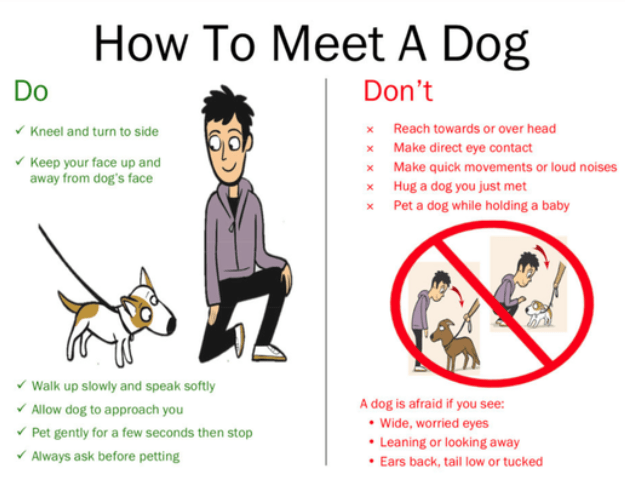
- When meeting an unknown dog, allow the dog to come to you. Crouch down or turn to the side. Let him sniff your hand before you pet him.
- Do not put your face close to an unknown dog; this includes “hugs and kisses.”
- Understand dog body language – most dogs will show specific warning signs before biting.
- If you are cornered by a dog, remain still and avoid eye contact. “Be a tree” position is effective in preventing bites. Never run and/or scream. When the dog stops paying attention to you, slowly back away.
- If knocked over by a dog, fall to your side in a fetal position, covering your head and face. Remain very still and calm.
- Never approach a dog that is eating, sleeping or caring for puppies. Dog in these situations are more likely to be protective and can become startled.
- Never leave young children or babies alone with a dog for any reason.
- Do not approach, touch or attempt to move an injured dog. Instead, contact a veterinary professional or animal control for assistance.
- What If a Dog Bite Occurs?
- If a dog bites a person, it’s important to act quickly. The dog owner should confine the dog, then immediately assist the victim. The victim should wash the bite thoroughly with water if possible, then seek immediate medical attention.
- Fortunately, most dog bites are preventable, however:
- Be aware of the dog’s behavior prior to any interaction; signs of aggression or fear should be respected.
- Use a soothing voice when speaking to an unfamiliar dog to help it feel more comfortable.
- Avoid sudden movements around unfamiliar dogs as this may startle them.
- If a dog appears to be lost, try to determine if it has an identification tag before taking any further action.
- Keep your hands away from a dog’s mouth and face, even if it appears friendly.
- Teach children not to approach dogs that are not familiar to them, even if the dog looks friendly.
- If a dog is barking, do not assume it is friendly; observe its body language and context before approaching.
- Always carry treats as a way to build trust with a dog at a safe distance, if appropriate.
- Respect a dog’s space and personal boundaries; give it time to approach you.
 JDC RESCUE - Jack Dog Center
Leave a comment